Bioceramic Domes
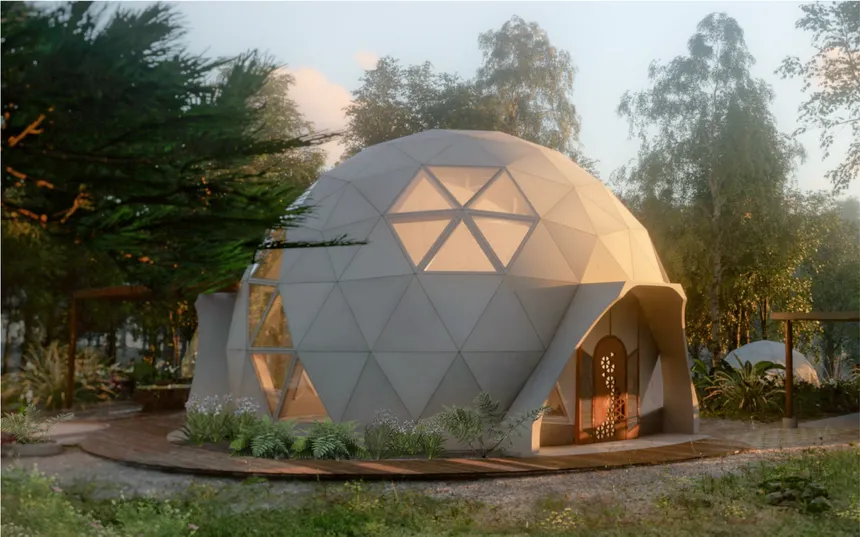
Bioceramic domes represent a revolutionary advancement in sustainable architecture, combining ancient material wisdom with cutting-edge materials science. Developed by pioneering company Geoship, these innovative structures leverage geodesic geometry enhanced with bioceramic composites to create homes that are not only sustainable but truly regenerative—designed to heal both people and the planet.
The Innovation
Material Science Breakthrough
Bioceramics are advanced ceramic materials that incorporate biological processes and natural mineral compounds. Unlike traditional ceramics, bioceramics can:
- Resist fire completely - Non-combustible and non-toxic when exposed to extreme heat
- Withstand flooding - Water-resistant without degradation or mold growth
- Prevent biological decay - Naturally resistant to mold, mildew, termites, and rot
- Last centuries - Estimated 500-year lifespan compared to 50-100 years for conventional homes
Geoship’s Technological Innovation
Geoship has engineered bioceramic materials specifically for geodesic dome applications, creating a complete building system that replaces concrete, wood, and steel with regenerative alternatives. Their approach integrates:
Advanced Materials Science: Proprietary bioceramic formulations that mimic natural stone formation processes while providing superior structural properties.
Sacred Geometry: Application of geodesic principles optimized for bioceramic material properties, creating structures that work in harmony with natural forces.
Factory Precision: Manufacturing processes that eliminate construction waste and ensure consistent quality, with components designed for perfect assembly.
Performance Characteristics
Energy Efficiency
Bioceramic domes achieve remarkable energy performance through multiple mechanisms:
Thermal Mass: The high thermal mass of bioceramic materials provides natural temperature regulation, absorbing heat during the day and releasing it at night.
Reduced Surface Area: Geodesic geometry minimizes surface area relative to volume, reducing heat loss in winter and heat gain in summer.
Natural Airflow: The dome shape creates convective airflow patterns that enhance passive cooling and ventilation.
Estimated Performance: 70% reduction in heating and cooling costs compared to conventional homes of similar size.
Climate Resilience
Bioceramic domes offer exceptional resistance to climate-related threats:
Fire Resistance: Completely non-combustible, making them ideal for wildfire-prone areas and reducing insurance costs.
Flood Resistance: Water-impermeable materials that won’t degrade during flooding events, unlike conventional construction materials.
Wind Resistance: Geodesic geometry provides superior wind load distribution, withstanding hurricane-force winds.
Seismic Performance: The triangulated structure and flexible joints offer excellent earthquake resistance.
Health and Environmental Benefits
Non-Toxic Materials: Free from volatile organic compounds (VOCs), formaldehyde, and other harmful chemicals common in conventional construction.
Regenerative Properties: Materials that actively contribute to environmental health rather than merely reducing negative impacts.
Biophilic Design: Natural materials and geometric patterns that support human wellbeing and connection to nature.
Applications and Use Cases
Residential Housing
Primary Residence: Bioceramic domes serve as comfortable, healthy family homes with minimal environmental impact and operating costs.
Accessory Dwelling Units (ADUs): Perfect for backyard cottages, home offices, or guest quarters that complement existing properties.
Multi-Generational Living: Dome communities can support extended families while maintaining individual privacy and shared spaces.
Community Development
Regenerative Villages: Geoship envisions entire communities built around bioceramic dome principles, creating resilient neighborhoods that function like natural ecosystems.
Affordable Housing: Factory production and reduced foundation requirements make bioceramic domes potentially more affordable than conventional housing.
Emergency Housing: Quick assembly and extreme durability make bioceramic domes ideal for disaster relief and temporary housing applications.
Specialized Applications
Eco-Resorts and Retreats: The unique aesthetic and environmental benefits make bioceramic domes perfect for sustainable tourism facilities.
Research Facilities: The controlled environment and durability support specialized scientific and educational applications.
Community Spaces: Dome structures can serve as gathering places, community centers, and educational facilities.
Manufacturing and Construction
Factory Production
Geoship utilizes advanced manufacturing processes that combine:
Precision Engineering: Computer-aided design and manufacturing ensure consistent quality and perfect fit of all components.
Material Optimization: Manufacturing processes that minimize waste and maximize material efficiency.
Quality Control: Rigorous testing and quality assurance protocols ensure structural integrity and performance.
Scalability: Factory production allows for scaling from individual homes to community-level development.
Assembly Process
Site Preparation: Minimal foundation requirements due to efficient load distribution and relatively light weight.
Component Delivery: Prefabricated components delivered to site in optimized shipping configurations.
Assembly: Rapid assembly process that can be completed in days rather than months, with minimal specialized equipment required.
Finishing: Integration of electrical, plumbing, and interior systems designed specifically for dome geometry.
Sustainability and Regenerative Design
Environmental Benefits
Carbon Sequestration: Bioceramic materials can capture and store atmospheric carbon during the curing process.
Material Circularity: At end-of-life, bioceramic components can be recycled or returned to the earth without environmental harm.
Energy Efficiency: Reduced energy consumption throughout the building lifecycle, from construction to operation to decommissioning.
Ecosystem Integration: Designs that work with natural systems rather than against them, supporting biodiversity and ecological health.
Social and Economic Benefits
Affordability: Reduced material costs, faster construction, and minimal maintenance requirements lower total cost of ownership.
Community Resilience: Domes that can withstand natural disasters support community stability and continuity.
Health Benefits: Non-toxic materials and natural design principles support occupant health and wellbeing.
Economic Opportunity: New manufacturing and construction processes create skilled jobs and local economic development opportunities.
Innovation and Future Development
Current Research
Material Science: Ongoing development of new bioceramic formulations with enhanced properties and reduced environmental impact.
Smart Integration: Research into embedded sensors, responsive materials, and automated systems for dome management.
Community Systems: Development of integrated systems for water collection, energy generation, and waste recycling in dome communities.
Future Applications
Vertical Integration: Multi-story dome structures for urban applications and dense housing.
Hybrid Systems: Integration with other sustainable technologies like solar, wind, and geothermal systems.
Global Scalability: Adaptation of bioceramic dome technology for different climates, cultures, and economic contexts.
Relationship to Traditional Geodesic Domes
Bioceramic domes represent an evolution of traditional geodesic dome principles:
Foundation: Built on the same geometric and structural principles that make traditional geodesic domes inherently strong and efficient.
Material Innovation: Replace conventional materials (steel, wood, concrete) with advanced bioceramic composites.
Enhanced Performance: Build upon traditional advantages while addressing limitations like waterproofing, insulation, and durability.
Regenerative Design: Go beyond sustainability to create buildings that actively contribute to environmental and social health.
Challenges and Considerations
Current Limitations
Availability: Limited production capacity and geographic availability during early market development.
Building Codes: New technology requiring adaptation of existing building codes and inspection processes.
Market Acceptance: Need for education and awareness building among consumers, builders, and regulators.
Financing: Mortgage and insurance industries requiring adaptation to understand and value bioceramic dome properties.
Development Needs
Infrastructure: Development of manufacturing facilities and supply chains for bioceramic materials.
Training: Education programs for builders, inspectors, and maintenance professionals.
Standards: Establishment of industry standards and testing protocols for bioceramic building materials.
Research: Continued investment in R&D to improve performance and reduce costs.
Related Concepts
- Geodesic Domes: Foundation geometric and structural principles
- Organic Architecture: Design philosophy alignment
- Permaculture: Systems thinking and regenerative design
- Advanced Manufacturing: Production technology and automation
- Regenerative economics and community development models
- Climate resilience and adaptation strategies
References and Resources
- Geoship Official Website: https://geoship.is/
- “Bioceramics Explained: The Future of Non-Toxic, Fireproof, and Climate-Resilient Homes” - Geoship Blog
- Keys for Tomorrow: “Geoship: Affordable Bioceramic Domes for Sustainable Living”
- Sol and Spirit: “Geoship: The Future of Affordable Housing & Regenerative Communities”